
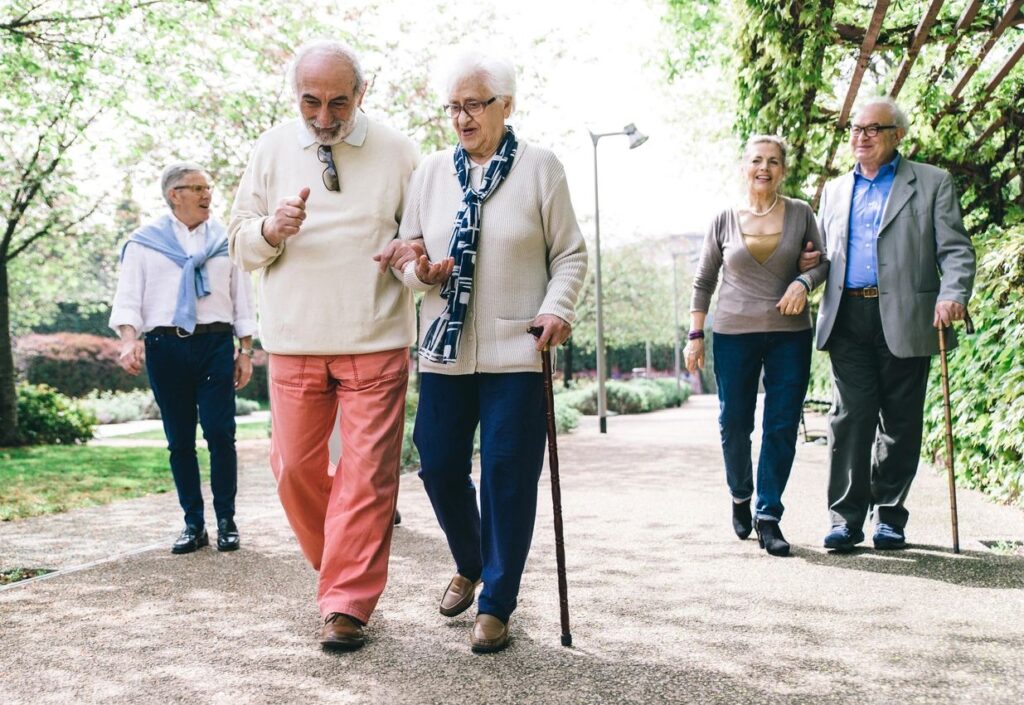
Many seniors say walking is their preferred form of exercise. That’s great, but only if you are doing it right.
According to an article in The Standard, for many seniors, their daily route is fixed, short, and at a slow pace. It states that “walking the same flat, familiar route at a slow pace while chatting is only basic daily activity—enough to barely maintain existing function.” If you want to maintain muscle and improve cardiopulmonary fitness, you need to pick up the pace. When walking for exercise, you should increase speed until your breathing becomes faster and slightly labored.
The best workout alternates fast-slow walking. This means doing three minutes of easy, slow walking, then three minutes of brisk, fast walking, and repeating at least 5 sets. And you should do this at least four days per week.
The article cites a study of seniors that found that after five months of alternating fast-slow walking, their estimated maximum aerobic capacity improved by an average of 14 percent. As a bonus, the seniors studied saw improvement in their knees as well, with knee extension strength increasing by 13 percent and knee flexion strength increasing by 17 percent.
How do you know if you’re walking at the right speeds? The article says during brisk walking, your breathing should be slightly labored, and you should feel slightly tired—but still able to speak short sentences. If you can only manage single words, you’re walking too fast. If you can easily hum or chat smoothly, you’re walking too slowly.
As with all exercise programs, you should consult your doctor for appropriate exercise intensity before starting fast-walking training.
Check out our other articles on Council of Seniors 365 for more advice on leading a healthy and happy retirement.

